Posted on May 7, 2026
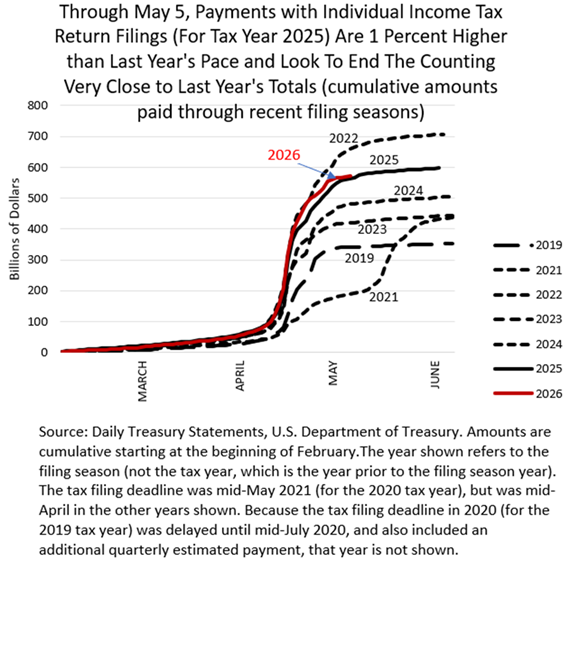
I don’t think it’s a big surprise, but payments of individual income taxes with federal tax return filings look to be ending the filing season very close to the amounts from 2025 (see the chart below). We had expected single digit growth in payments with tax returns, so actual growth is a bit less–but given how variable those payments are from year to year, that difference doesn’t rise to the level of surprise. We believe that two main effects largely netted out to yield the flat growth: an increase in stock market values and Wall Street bonuses in 2025 that would normally substantially boost payments with tax returns; and federal tax cuts enacted in the 2025 Reconciliation Act that took effect in 2025 and were largely not reflected that year in reduced tax withholding and quarterly estimated payments–thus boosting refunds and lowering payments during this tax filing season.
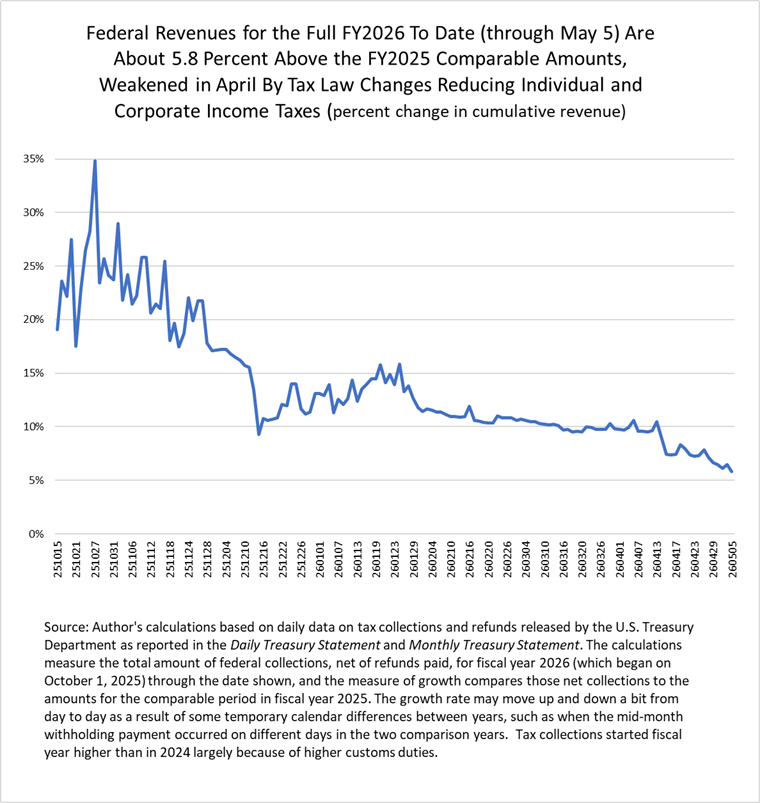
Overall federal revenue growth for the fiscal year from October 2025 through April slowed significantly to, we estimate, about 6 percent relative to the amounts from last year’s October-April period. For the month or so before April 15, overall revenues for the fiscal year had been running about 9 percent to 10 percent above the previous year’s amounts (see the second chart below). Not only did payments with individual income tax returns not grow in April, which alone brought down overall revenue growth, but revenues in April from corporate income taxes fell sharply and individual income tax refunds continued to run well ahead of year-ago amounts. Again, the Reconciliation Act played a major role there, with business tax cuts lowering corporate income tax revenues and individual income tax cuts raising individual income tax refunds by a hefty 18 percent over the full filing season through April.
There are a lot of big moving pieces to the overall federal revenue picture for the rest of the fiscal year, but most point to the fiscal year ending with lower than the 6 percent or so growth we see through April. It wouldn’t be at all surprising if corporate income tax revenues are down again in the June quarterly payment compared to the amount from June of last year. Revenues from income and payroll tax withholding, the largest component of overall revenues, in recent months have been running around 4 percent to 5 percent above year-ago amounts, so that revenue source is unlikely to boost overall revenue growth above 6 percent. And a big wildcard is substantial tariff refunds, which are scheduled to start next week. That is the result of the Supreme Court invalidating a big chunk of the Administration’s tariff increases, which other analysts estimate at around $170 billion in total. Refunds of that amount alone would reduce overall federal revenue growth by about 3 percent this year. Questions remain, however, about how many eligible importers will apply for the refunds, and how quickly, and even if the refunds will be booked in the federal budget as tax refunds (rather than increased federal spending). Either way such refunds increase federal deficits, and I expect they will be classified as tax refunds, but I’ve been surprised by classification issues like that before.
So, there is lots more to track in the federal revenue realm this fiscal year.